 USA
USA UK
UK Canada
 Australia
GRE Online Classes — 4 Hours Daily Live.
Target: 320+
India’s most intensive live online GRE course.
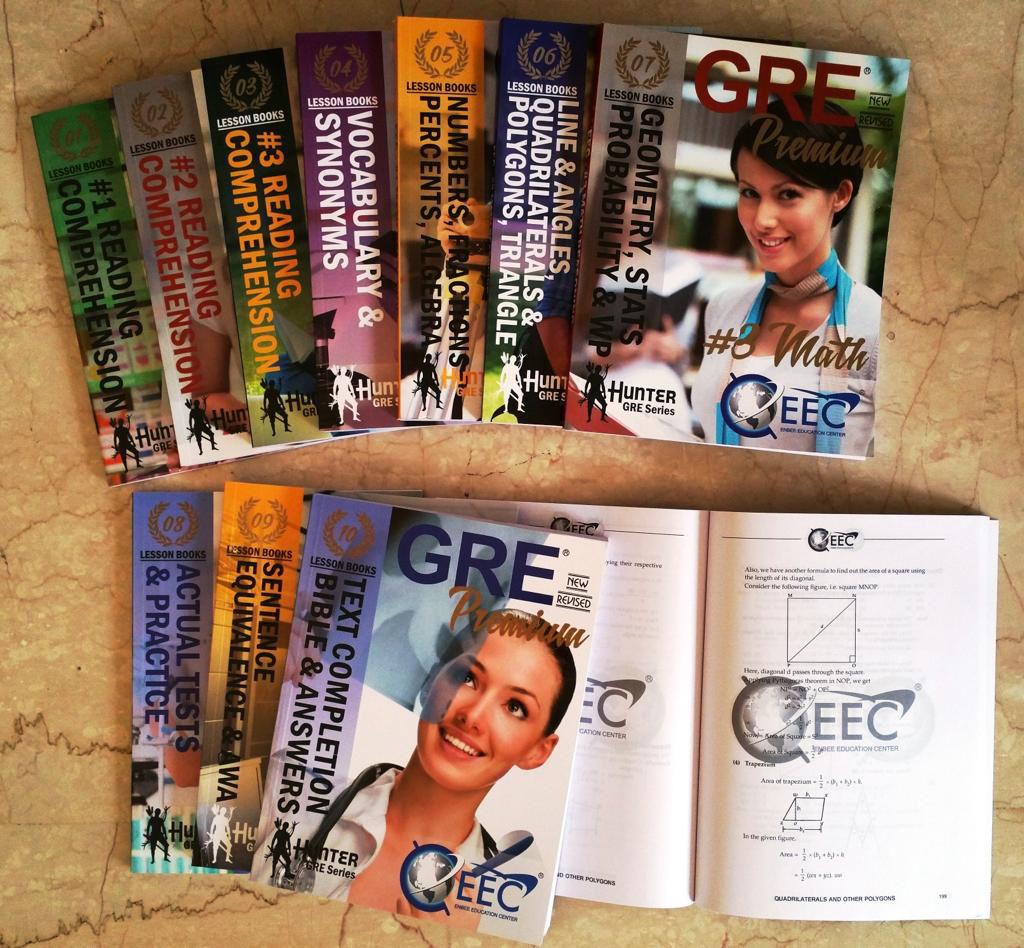
4 hours of live daily classes — 2h Quant + 2h Verbal with expert faculty. 10 Printed Books delivered free.
Join from anywhere in India — Delhi, Mumbai, Bangalore, Chennai, Hyderabad, Pune, Kolkata, Lucknow, Jaipur, Guwahati & more
.gif)
.jpeg)
.jpeg)
Target Score
Top 1% — Ivy League Ready.
Complete guide for students
Exam pattern, scoring, preparation plan and how EEC coaching works — explained by our GRE faculty.
Why EEC (Built for Results)
Award-winning test-prep brand with full-time trained teachers.
Full-Time Trained Teachers
No freelancers. Experienced, certified faculty.
Award-Winning Brand
Trusted partners across IELTS/TOEFL/PTE/DET.
Day-wise Pedagogy
Measurable outcomes—no guesswork.
Computer Adaptive Mocks
Simulate the real exam experience.
Proven Track Record
Videos, photos, and Google reviews.
Free Visa Help
USA, Canada, UK, Australia, Germany, and more.
Why 4 Hours Daily Works
The math is simple: more practice = higher scores
Program Snapshot (Live + Flex)
Monday to Saturday (6 days a week): 2h Quant + 2h Verbal; extra Math-skills; doubt-solving class.
2 Hours Quant
Arithmetic, Algebra, Geometry, Data Analysis.
2 Hours Verbal
Reading Comprehension, Text Completion, Sentence Equivalence.
Extra Support
Math-skills batch & doubt-solving sessions.
Flexible Timing
Morning & Evening batches. Switch freely!
Personalized Guidance
Fix weak areas fast
Attend multiple batches at no extra cost!

Course Access
3 Months Live + 6 Months Portal & Mock Tests
Course Validity & What You Get
Live Classes
3 Months
Monday to Saturday, 6 days a week
Pre-recorded Videos + Mock Tests
3 Months
800+ hours of expert-led lessons
Learn 2 hours Quant + 2 hours Verbal (Monday to Saturday, 6 days a week) with extra Math-skills and doubt-solving. Switch freely between morning/evening batches and attend multiple batches at no extra cost.
We Deliver Books
Online students shouldn't just get PDFs. We courier a kit of 10 Premium Books (3000+ Pages) to your home for FREE.
4 Quantitative Books
Comprehensive coverage of all math topics with solved examples.
6 Verbal Books
Includes Reading Comprehension strategies and AWA templates.
3000+ Pages
Extensive practice material exclusive to EEC students.
Free Delivery
We ship pan-India. Get your material before classes start.
GRE Computer Adaptive Mock Tests
Practice like the real exam with 6 full-length mocks (Quant, Verbal, AWA).
6 Full Length Mocks
Experience the "Shorter GRE" format (1h 58m). Build stamina and time management.
Score Analysis & Error Reports
Get score analysis, error-type reports, and a refinement plan after each test.
800+ Hours Video Library
Pre-recorded verbal, quantitative and AWA section videos for revision. Stream anytime to reinforce Live learning.

Study Material (Exclusive)
Get 10 EEC printed course books created by expert faculty.
4 Quantitative Books
Comprehensive coverage of all math topics with solved examples.
6 Verbal & AWA Books
Reading Comprehension strategies and AWA templates.
GRE Score Predictor
A transparent, research-backed predictor. Enter a recent practice-test score and your study plan — see a realistic final-score range, your percentile against Indian peers, and the US university tier it unlocks.
Who this is for
Applicants who have taken at least one full-length mock and are 2–16 weeks from their official test date.
What you get
A predicted range (260–340), Indian + global percentile, matching US university tier, and a personalised next-step plan.
Your Current Practice Scores
Range: 130–170. Use your most recent full-length practice test — not a single untimed section.
Range: 130–170. Indian engineering cohort averages ~158.6 — a high starting number here is normal, not exceptional.
Current Total Score
295/340
Your Study Plan
Recommended 8–12 weeks. Gains taper after week 8 and cap at week 12.
Be honest — overestimating hours makes the prediction overly optimistic. EEC's live programme runs 4 hrs daily.
Total Study Hours
192 hours
(6 days/week × 8 weeks × 4 hrs/day)
Mock trajectory (optional)
0 / 5Non-ETS sources are noisier — predictions assume ETS POWERPREP-equivalent scoring.
Add at least one mock test result to see your trajectory.
Work backwards from a goal
*Predictions are statistical estimates calibrated on ETS 2024–25 data. Actual scores vary with effort, aptitude and test-day conditions.
Turn your score into an admit
The GRE is one piece. EEC handles prep, admissions and visa — end to end.
GRE Coaching
4 hrs daily live classes, 10 physical books, 6 full-length mocks, 3 months live + 6 months portal & video.
Start coachingUSA Admissions Counselling
University shortlisting, SOP/LOR review, application management, and scholarship guidance.
Plan admissionsStudent Visa Help
F-1 documentation, mock interviews, financial statement prep, and Proven Track Record.
Get visa helpGRE exam fees in India (2026)
Register only when your predicted range is competitive for your target tier — retakes are non-trivial.
| Service | India (INR) | Rest of World (USD) |
|---|---|---|
| GRE General Test registration | ₹22,000 | $220 |
| Rescheduling / test-centre change | ₹5,000 | $50 |
| Additional Score Report (per university) | ₹2,900 | $40 |
| Analytical Writing Score Review | ₹5,900 | $60 |
| GRE Subject Test | ₹14,500 | $150 |
Registration includes 4 free score reports — but they must be picked on test day, before you see your AWA result. Shortlist universities ahead of time.
Why a 170 Quant is not a 99th percentile (and why that matters)
The Indian engineering cohort has pushed Quant percentiles into severe compression. The same scaled score means very different things across Verbal vs Quant — and this is how top-50 universities actually read your profile.
| Scaled Score | Verbal Percentile | Quant Percentile |
|---|---|---|
| 170 | 99th | 91st–96th |
| 168 | 98th | 81st–87th |
| 165 | 95th–96th | 70th–86th |
| 160 | 84th–89th | 53rd–73rd |
| 155 | 65th–69th | 40th–53rd |
| 150 | 47th | 34th |
Source: ETS Guide to the Use of Scores (July 2020–June 2023 interpretive period, used through 2025 admissions). A Quant below 160 is dangerously close to the median for STEM applicants.
University tiers mapped to GRE score
What each band of your predicted range actually unlocks in US graduate admissions.
Ivy League / Top 10
- Total
- 330+
- Quant
- 168+
- Verbal
- 162+
Examples: MIT, Stanford, Harvard, CMU
Top 20
- Total
- 325+
- Quant
- 167+
- Verbal
- 158+
Examples: Georgia Tech, UC Berkeley, Cornell
Top 50
- Total
- 315-325
- Quant
- 165+
- Verbal
- 155+
Examples: USC, Purdue, UIUC, UT Austin
Top 100
- Total
- 305-315
- Quant
- 160+
- Verbal
- 150+
Examples: ASU, Northeastern, Syracuse
Other Good Universities
- Total
- 295-305
- Quant
- 155+
- Verbal
- 145+
Examples: Various state universities
| Tier | Total | Quant | Verbal | Examples |
|---|---|---|---|---|
| Ivy League / Top 10 | 330+ | 168+ | 162+ | MIT, Stanford, Harvard, CMU |
| Top 20 | 325+ | 167+ | 158+ | Georgia Tech, UC Berkeley, Cornell |
| Top 50 | 315-325 | 165+ | 155+ | USC, Purdue, UIUC, UT Austin |
| Top 100 | 305-315 | 160+ | 150+ | ASU, Northeastern, Syracuse |
| Other Good Universities | 295-305 | 155+ | 145+ | Various state universities |
GRE Score Calculator — FAQs
Answers to help you use this tool, interpret the result, and plan next steps.
The GRE (Graduate Record Examination) is a standardized test required by most graduate schools in the USA, Canada, and Germany. It measures your verbal reasoning, quantitative reasoning, and analytical writing skills. The test is administered by ETS (Educational Testing Service) and is accepted by 4,000+ universities worldwide. In 2024-25, over 206,000 students took the GRE globally, with India being the #1 country for test-takers.
The GRE is now just 1 hour 58 minutes (under 2 hours) since the September 2023 update. This includes: Analytical Writing (30 min for 1 essay), Verbal Reasoning (41 min for 27 questions), and Quantitative Reasoning (47 min for 27 questions). There are no breaks during the exam.
A good GRE score depends on your target universities: 310+ is considered safe for most universities, 320+ is excellent for Top 50 universities, and 330+ is Ivy League territory. The global average is around 304 (Verbal 152 + Quant 152). Indian students average 151 Verbal and 158.6 Quant. For STEM programs, Quant score matters more.
GRE scores are measured on these scales: Verbal Reasoning: 130-170 (in 1-point increments), Quantitative Reasoning: 130-170 (in 1-point increments), Analytical Writing: 0-6 (in half-point increments). The maximum combined score for Verbal + Quant is 340. AWA is reported separately.
According to official ETS data (2024-25), Indian test-takers average: Verbal 151.0 (slightly below global average of 152.0), Quantitative 158.6 (above global average of 156.9), and AWA 3.3 (below global average of 3.5). Indians excel in Quant but need to focus more on Verbal and AWA.
Focus on weak areas (spend 80% of study time on your bottom 20% of concepts), take regular mock tests to track progress, learn time management (2 min/question for Quant, 1.5 min for Verbal), and practice with official ETS materials. Most students improve 10-15 points with 2-3 months of dedicated preparation.
Typically 2-3 months with 2-4 hours daily study. Working professionals may need 3-4 months with evening study. Intensive preparation can be done in 30 days with 4-6 hours daily. Your starting level matters - if you're already strong in math, you can focus more on Verbal. EEC's 3-month program with 4 hours daily is designed for optimal results.
Coaching is recommended if: you need structure and accountability, struggle with self-discipline, have weak math fundamentals, are targeting 320+, or have limited time. Self-study works if you're a strong self-learner with good math/verbal foundations and have 4-6 months to prepare. EEC's coaching at ₹15,000 offers 4 hours daily live classes - far more intensive than self-study.
Your predicted score is just the start.
An EEC counsellor will turn this estimate into an action plan — coaching, admissions or visa, whichever comes next. Free of charge.
Find Your Dream University
Enter your GRE scores to discover universities that match your profile. Get personalized recommendations based on your target program and country.
Your GRE Scores
Total Score
315/340
Preferences
Based on your scores:
*University requirements vary by program and year. Scores shown are approximate minimums based on recent admissions data. Always check official university websites for current requirements.
GRE Study Plan Generator
Get a week-by-week personalized study plan based on your target score, available time, and weak areas. Designed by GRE experts.
Your Score Goals
Score Gap
+30 points
Time & Focus
EEC provides 4 hours daily live classes
Total Study Hours
192
Mock Tests
4
Expected Improvement
+23
Projected Score
313
*Study plans are personalized recommendations. Actual progress depends on individual effort, consistency, and aptitude.
Compare Value for Money
See how EEC's GRE program compares with industry alternatives. Make an informed decision based on real value, not just price.
Compare EEC with:
EEC GRE Program
India's most intensive GRE coaching
50% OFF - Limited Time
Cost per live hour
₹42/hr
Premium Coaching
High-end coaching institutes
Cost per live hour
₹450/hr
With EEC, you save
₹30,000
67% less than Premium Coaching
While getting
3.5x
more value
What's Included FREE with EEC
Get Maximum Value at Minimum Cost
Join India's most intensive GRE program at just ₹15,000 - that's only ₹42/hour!
Enroll Now at 50% OFF*Industry comparison based on average market rates. Actual pricing may vary. EEC pricing valid for current batch only.
What GRE Students Say

AMI NAIK
“Environment is so peaceful .... and materials are also helpful... best place for GRE preparation and tutors also available 24/7 for guidance”

Pragati Patel
“As an occupational therapist, I aim to pursue my master’s degree in the United States to enhance my clinical knowledge and professional skills. To achieve this goal, I enrolled in a GRE preparation co…”

Swapnil Pant
“The coaching was absolute on point and very streamlined. I did my prep for my GRE and with the help of it I scored 321 in my GRE exam. I would recommend this coaching for GRE preparation.”
Students Who Reached the USA 🇺🇸
Real stories from EEC students who received US student visas for Masters, MS & PhD programs
Dhruvi Pardeshi
“I am sharing my incredible experience with Harshil Desai, my counselor at EEC Ghatlodiya. His expertise and dedication played a pivotal role in securing my admission to a top Unive…”
Komal Patel
“My journey with EEC Navsari has been exceptional from day one. The IELTS preparation facilities are excellent—dedicated library practice, instant help at the tutor desk, and regula…”
Pragati Patel
“As an occupational therapist, I aim to pursue my master’s degree in the United States to enhance my clinical knowledge and professional skills. To achieve this goal, I enrolled in …”
Shah Tina
“I am Khushi Shah, and I am thrilled to share that I achieved an overall 6.5 bands in IELTS after preparing at EEC Bapunagar 😊📚. I am now planning to pursue my Master's degree in …”
Priyanshu Patra
“I had already secured 7 bands in IELTS, and with the incredible support of Team EEC Bharuch, I’m thrilled to share that I’ve also been granted my US F1 student visa for Fall 2025! …”
yug savaliya
“I had an excellent experience at EEC Nikol while preparing for IELTS and PTE. The institute provides very detailed and well-structured guidance about courses and universities acros…”
GRE Online Pricing
4 hours daily live classes with 10 books delivered
Regular Fee
₹30,000
50% OFF - You Pay
₹15,000
Including 18% GST
10 Physical Books
4 Hrs Daily Live
800+ Hrs Videos
6 Adaptive Mocks
✓ GST Included •No hidden charges •Books delivered FREE to your home!
Already Living in USA?
Preparing for MS or PhD admissions while living in the USA? Whether you're on an F-1 student visa, H-1B work visa, or a permanent resident — here's how EEC's GRE coaching works for you.
EEC Live Class Timings in Your Timezone
Live Classes with Real Teacher — Mon-Sat IST. Math: 8-10 AM (Math 1), 11-12 PM (Advanced Math), 7-8:30 PM (Math 2), plus 5-6 PM Tue/Thu/Sat (Math for Non-Math). Verbal: 10-11 AM (Verbal 1), 6-7 PM (Verbal 2).
California / Seattle (PST)
Prev. day 7:30 PM – 9:30 PM
Perfect evening slot
Denver / Phoenix (MST)
Prev. day 8:30 PM – 10:30 PM
Evening slot
Texas / Chicago (CST)
Prev. day 9:30 PM – 11:30 PM
Late evening slot
New York / New Jersey (EST)
Prev. day 10:30 PM – 12:30 AM
Late night slot
India (IST)
8:00 AM – 10:00 AM
Math 1 batch (Mon-Sat)
Timings shown are for the Math 1 batch (8-10 AM IST, Mon-Sat) — ideal evening study for US residents. Other batches (Math 2 7-8:30 PM IST, Verbal 2 6-7 PM IST) fall at early morning US time — watch recordings instead. All sessions are recorded.
Test Centers & At-Home Option
700+ Prometric test centers across the USA
GRE at Home available — same content, scoring, and acceptance
Home test needs: computer, camera, mic, whiteboard, private room
Register at ets.org — fee $220
Shorter format since Sep 2023: 1 hour 58 minutes
Score Targets for Top MS/PhD Programs
325+ → MIT, Stanford, CMU, Berkeley (CS/Engineering)
320+ → Top science PhD programs
315+ → Humanities/Social Science PhD
310+ → Mid-tier MS programs
Score range: 130–170 per section (V+Q total: 260–340)
ScoreSelect — Send Only Your Best
GRE's ScoreSelect lets you choose which scores to send
See unofficial scores on test day before deciding
Retake every 21 days, up to 5 times per year
4 free score reports on test day, $35 each after
Scores valid 5 years — plan strategically
For F-1 / H-1B Visa Holders
F-1 students: Take GRE while in the US for MS/PhD applications
H-1B professionals: GRE accepted at MBA programs too
GRE accepted at virtually all top business schools now
Apply to both MS/PhD AND MBA programs with one GRE score
No visa implications for taking standardized tests in the US
Important for GRE Test-Takers in the USA
GRE FAQs
Everything you need to know about the GRE exam, scores, preparation, and EEC coaching. Can't find your answer? Ask us directly.
GRE Basics
The GRE (Graduate Record Examination) is a standardized test required by most graduate schools in the USA, Canada, and Germany. It measures your verbal reasoning, quantitative reasoning, and analytical writing skills. The test is administered by ETS (Educational Testing Service) and is accepted by 4,000+ universities worldwide. In 2024-25, over 206,000 students took the GRE globally, with India being the #1 country for test-takers.
GRE stands for Graduate Record Examination. It's the most widely accepted graduate admissions test globally, used for Master's (MS/MA/MBA) and PhD programs.
You should take the GRE if you're planning to pursue a Master's (MS/MA/MBA) or PhD program abroad, especially in USA, Canada, Germany, UK, or Australia. In 2024-25, 206,004 students took the GRE globally, with India being the #1 country. Most STEM programs (Computer Science, Data Science, Engineering) require or strongly prefer GRE scores.
The GRE General Test costs ₹23,452 in India (flat localized Indian pricing, taxes included — ETS DOES localize India pricing; it is NOT the global USD converted). The GRE Subject Test is ₹17,818. Additional fees include: Rescheduling (~₹4,800), Additional Score Report (~₹3,350), and Score Review (~₹4,800). The fee includes 4 free score reports to universities of your choice.
The GRE is now just 1 hour 58 minutes (under 2 hours) since the September 2023 update. This includes: Analytical Writing (30 min for 1 essay), Verbal Reasoning (41 min for 27 questions), and Quantitative Reasoning (47 min for 27 questions). There are no breaks during the exam.
The GRE has 3 sections: (1) Analytical Writing - 1 essay task called 'Analyze an Issue' in 30 minutes; (2) Verbal Reasoning - 27 questions in 41 minutes covering reading comprehension, text completion, and sentence equivalence; (3) Quantitative Reasoning - 27 questions in 47 minutes covering algebra, arithmetic, geometry, and data analysis. Total: 55 questions in 1h 58m with no breaks.
You can take the GRE up to 5 times in any 12-month rolling period. You must wait at least 21 days between attempts. If you cancel your score, that attempt still counts toward your 5-test limit. Most students take the GRE 2-3 times to achieve their target score.
GRE scores are valid for 5 years from your test date. After 5 years, scores expire and cannot be reported to universities. For example, if you take the GRE in January 2026, your scores are valid until January 2031. Plan your test date based on your target application cycle.
Yes, the GRE at Home option is available in India 24/7. You take the test on your own computer with a human proctor monitoring via webcam. However, for visa purposes, we strongly recommend taking the test at a test center to avoid scrutiny during your visa interview. Visa officers may question home-based test scores.
You need a valid passport as your primary ID for the GRE in India. The name on your passport must exactly match your registration name - even a single letter difference can prevent you from taking the test. Carry your original passport (not a photocopy) to the test center.
Register at ets.org or etsindia.org. Create an ETS account, select your preferred test date and center (14+ cities available), and pay ₹22,000 via UPI, credit/debit card, or net banking. Book at least 2-3 weeks in advance to get your preferred date and location. You'll receive a confirmation email with your test details.
The GRE General Test measures general skills (verbal reasoning, quantitative reasoning, analytical writing) and is required by most programs. GRE Subject Tests measure knowledge in specific fields like Physics, Chemistry, Mathematics, or Psychology and are required by some PhD programs. Most MS applicants only need the General Test.
GRE Scores
A good GRE score depends on your target universities: 310+ is considered safe for most universities, 320+ is excellent for Top 50 universities, and 330+ is Ivy League territory. The global average is around 304 (Verbal 152 + Quant 152). Indian students average 151 Verbal and 158.6 Quant. For STEM programs, Quant score matters more.
GRE score requirements vary by university tier: Top 20 universities (MIT, Stanford, CMU) typically expect 325+; Top 50 universities need 315-320; Top 100 universities accept 305-315; Other universities may accept 295-305. For Computer Science and Engineering, Quant scores of 165+ are highly valued.
GRE scores are measured on these scales: Verbal Reasoning: 130-170 (in 1-point increments), Quantitative Reasoning: 130-170 (in 1-point increments), Analytical Writing: 0-6 (in half-point increments). The maximum combined score for Verbal + Quant is 340. AWA is reported separately.
The GRE uses section-level adaptive scoring. Each section (Verbal and Quant) is scored from 130-170 in 1-point increments. Your performance on the first section determines the difficulty of the second section. AWA essays are scored by both human raters and an AI system on a 0-6 scale. Scores are available 8-10 days after your test.
ScoreSelect is an ETS feature that lets you choose which GRE scores to send to universities. You can send your best scores from the last 5 years and hide lower scores. This means you can take the GRE multiple times and only report your highest scores. Universities only see the scores you choose to send.
During registration, you get 4 free score reports to send to universities of your choice. Additional reports cost ₹2,900 each. Scores are sent directly from ETS to universities - you cannot send them yourself. You can designate score recipients on test day or up to 72 hours after. Scores typically reach universities within 10-15 days.
For Research Assistantships (RA) and Teaching Assistantships (TA), professors typically look for Quant 165+ and Verbal 155+. Higher scores significantly increase your funding chances. For merit-based scholarships, aim for 320+ total. A strong GRE score can help you secure $10,000-$30,000 per year in funding.
According to official ETS data (2024-25), Indian test-takers average: Verbal 151.0 (slightly below global average of 152.0), Quantitative 158.6 (above global average of 156.9), and AWA 3.3 (below global average of 3.5). Indians excel in Quant but need to focus more on Verbal and AWA.
For Top 50 US universities, aim for: Total score of 315-325, Quant score of 165+ (especially for STEM), Verbal score of 155+, and AWA of 4.0+. Universities like Georgia Tech, USC, UIUC, and Purdue typically admit students with 315-320. Higher scores improve your chances for both admission and funding.
Focus on weak areas (spend 80% of study time on your bottom 20% of concepts), take regular mock tests to track progress, learn time management (2 min/question for Quant, 1.5 min for Verbal), and practice with official ETS materials. Most students improve 10-15 points with 2-3 months of dedicated preparation.
GRE Preparation
Follow a structured approach: (1) Take a diagnostic test to identify weak areas; (2) Study concepts systematically - Quant fundamentals, Verbal strategies, AWA templates; (3) Practice with official ETS questions daily; (4) Take full-length mock tests weekly; (5) Review mistakes and refine strategy. EEC's 4-hour daily program covers all this with expert guidance.
Typically 2-3 months with 2-4 hours daily study. Working professionals may need 3-4 months with evening study. Intensive preparation can be done in 30 days with 4-6 hours daily. Your starting level matters - if you're already strong in math, you can focus more on Verbal. EEC's 3-month program with 4 hours daily is designed for optimal results.
Yes, but it requires 4-6 hours of focused daily study. In 30 days, you can cover all Quant concepts, learn Verbal strategies, practice AWA essays, and take 4-5 full mocks. This works best if you already have strong math fundamentals. EEC's intensive batch covers 4 hours of live classes daily plus self-study assignments.
A proven 12-week plan: Week 1-2: Diagnostic test + fundamentals review; Week 3-6: Concept mastery (Quant topics, Verbal strategies); Week 7-10: Intensive practice + mock tests; Week 11-12: Final revision + test simulation. Study 2h Quant + 2h Verbal daily. Take one full mock every weekend starting Week 5.
Coaching is recommended if: you need structure and accountability, struggle with self-discipline, have weak math fundamentals, are targeting 320+, or have limited time. Self-study works if you're a strong self-learner with good math/verbal foundations and have 4-6 months to prepare. EEC's coaching at ₹15,000 offers 4 hours daily live classes - far more intensive than self-study.
The Official ETS Guide (4th Edition) is essential - it's the only source of real GRE questions. Also recommended: 5 lb. Book of GRE Practice Problems for extra practice, vocabulary flashcard apps for word lists, and Barron's GRE for additional strategies. EEC provides 10 exclusive printed books (3000+ pages) covering all topics comprehensively.
Focus on reading comprehension (50% of Verbal section), learn high-frequency vocabulary (600-1000 words), practice text completion strategies, and read academic articles daily. For Indians, Verbal is typically the weaker area - dedicate 2 hours daily to Verbal practice. Learn to identify answer traps and eliminate wrong choices systematically.
Master all concepts (Algebra, Arithmetic, Geometry, Data Analysis), avoid silly mistakes (the #1 barrier to 170), practice time management (2 min/question), memorize key formulas and shortcuts, and take 6+ full mocks. Focus on accuracy over speed initially. Review every wrong answer to understand the concept gap.
Focus on 600-1000 high-frequency words. Top words include: abate, aberrant, chicanery, cogent, disseminate, gainsay, laconic, latent, laud, pragmatic, recondite, specious, taciturn, venerate. Learn words in context, not just definitions. Use flashcards and spaced repetition. EEC's Verbal books include comprehensive word lists with usage examples.
Study the 328 official essay topics from ETS website, practice writing essays in 30 minutes, use templates for structure (intro, 2-3 body paragraphs, conclusion), and get feedback on your essays. Focus on clear argumentation, specific examples, and proper grammar. Aim for 4.0+ which is sufficient for most programs.
GRE vs Other Exams
They test different skills. GRE has harder vocabulary but more straightforward math. GMAT has harder data sufficiency questions and integrated reasoning. Most students find GRE slightly easier overall. Choose GRE if you're targeting MS programs; choose GMAT if targeting top MBA programs. Many business schools now accept both.
Choose GRE if: you have strong vocabulary, prefer straightforward math, want more time per question, or are targeting MS programs. Choose GMAT if: you have strong logical reasoning, prefer data interpretation, or are targeting top MBA programs. GRE allows calculator; GMAT doesn't for most questions. Most students find GRE slightly easier.
Yes, they test completely different things. IELTS tests English language proficiency (reading, writing, speaking, listening). GRE tests analytical and reasoning skills (verbal reasoning, quantitative reasoning, analytical writing). Most US universities require both for international students - IELTS for English proficiency and GRE for academic aptitude.
For MBA programs, yes - most accept both. For MS programs, GRE is preferred and sometimes required. Many business schools now accept GRE for MBA admissions. Check your target program's requirements. If you're applying to both MS and MBA programs, GRE is more versatile as it's accepted by both.
TOEFL tests English language proficiency (reading, writing, speaking, listening) - it proves you can study in English. GRE tests analytical reasoning skills (verbal, quantitative, writing) - it proves you can handle graduate-level academics. International students typically need both: TOEFL for language requirement, GRE for academic requirement.
GRE for Countries
Yes, most top US universities have reinstated GRE requirements for 2026. Top-tier universities (MIT, Stanford, CMU, Georgia Tech) require or strongly prefer GRE. Even 'test-optional' schools prefer applicants with GRE for scholarships and funding. A strong GRE score (315+) also helps prove 'academic intent' during your visa interview.
GRE is not mandatory for most German universities but is highly recommended for top institutions. TU Munich requires Quant 157-164 for many programs. RWTH Aachen requires Quant 165 for competitive programs. A score of 315+ strengthens your application significantly. German universities focus more on Quant scores for STEM programs.
Most Canadian universities don't require GRE for MS programs. However, top programs at University of Toronto, UBC, McGill, and Waterloo may prefer or recommend it. GRE can strengthen your application and help with funding opportunities. Check individual program requirements as policies vary significantly.
Generally not required for Australian universities. Some research programs and PhD applications may prefer it. Focus on IELTS/PTE for Australia as English proficiency is the primary requirement. If you're also applying to US universities, taking GRE gives you more options.
Most UK universities don't require GRE for taught Master's programs. Some business schools and research programs may accept it. IELTS is the primary requirement for UK. However, if you're applying to both US and UK universities, having a GRE score gives you flexibility.
Over 4,000 universities worldwide accept GRE. Top US universities include: MIT, Stanford, Harvard, CMU, Georgia Tech, USC, Purdue, UIUC, UT Austin, UCLA, UC Berkeley, Columbia, Cornell, and many more. Almost all MS and PhD programs in USA accept GRE scores.
MIT doesn't publish official cutoffs, but admitted students typically have: Total 325+, Quant 167+, Verbal 160+. For STEM programs like Computer Science and Engineering, Quant is prioritized. MIT is highly competitive - focus on a strong overall application including research experience, recommendations, and statement of purpose.
Stanford's admitted students typically average: Total 325-330, Quant 168+, Verbal 162+. Requirements vary by department - Engineering and Computer Science focus more on Quant. Stanford is extremely selective, so GRE is just one factor alongside research experience, recommendations, and fit with faculty.
EEC GRE Coaching
EEC's ₹15,000 GRE package includes: 4 hours daily live classes (2h Quant + 2h Verbal), 10 physical books (3000+ pages) delivered FREE to your home, 6 adaptive mock tests with detailed analysis, 800+ hours video library for revision, 3 months live classes + 6 months portal and video access (3 months free after coaching), free visa guidance and admission counseling. This is India's most comprehensive GRE program.
EEC offers Live Classes with Real Teacher across 6 IST batches Monday to Saturday. Math: 8-10 AM (Math 1), 11 AM-12 PM (Advanced Math), 5-6 PM Tue/Thu/Sat (Math for Non-Math Students), 7-8:30 PM (Math 2). Verbal: 10-11 AM (Verbal 1), 6-7 PM (Verbal 2). You can switch freely between batches and even attend multiple batches at no extra cost. Doubt-solving sessions are also available.
Yes! You receive 10 exclusive EEC printed books totaling 3000+ pages: 4 Quantitative books covering all math topics with solved examples and practice drills, and 6 Verbal & AWA books with reading comprehension strategies, vocabulary building, and essay templates. Books are delivered FREE to your home anywhere in India within 3-5 days of enrollment.
EEC includes 6 full-length computer adaptive mock tests that simulate the real GRE experience. After each mock, you get detailed score analysis, error-type reports identifying your weak areas, and a personalized refinement plan. The mocks are valid for 6 months — your 3 months of live classes plus 3 months free — so you can keep practising on the portal after coaching ends.
Yes! Free USA admission counseling, university shortlisting, and visa guidance are included with your GRE course. EEC partners with 300+ universities globally and has a proven visa track record. You get complete study abroad support - from GRE preparation to university admission to visa filing - all under one roof.
Still have questions?
Our GRE experts are here to help. Get personalized guidance for your study abroad journey.
Talk to an Expert→📦 WHAT YOU GET TODAY
💰 YOU SAVE: ₹20,000 (57% OFF!)
🚀 START THIS WEEK
Pay now and join the next available batch
Math: 8-10 AM (Math 1) / 11 AM-12 PM (Advanced Math) / 5-6 PM (Math (Non-Math Background)) Tue/Thu/Sat / 7-8:30 PM (Math 2)
→ Live Classes with Real Teacher · Multiple batches available
Verbal: 10-11 AM (Verbal 1) / 6-7 PM (Verbal 2)
→ Next batch starts: Monday
📦 Your books will be shipped within 24 hours!
Free Extra Optional Grammar Class
Live Classes with Real Teacher
Sharpen your English grammar fundamentals with live, interactive sessions taught by EEC Real Teachers. Open to every EEC online student at no extra cost. Drop in to any batch that fits your schedule — attendance is fully optional.
9:00 AM – 10:00 AM IST
10:00 AM – 11:00 AM IST
5:00 PM – 6:00 PM IST
Unlock Free GRE Assistance And Book At A Discounted Price
- Fully free assistance
- Error-free processing
- Expert support throughout
Your Discounted Price
Limited-time offer · Call to get the discount